

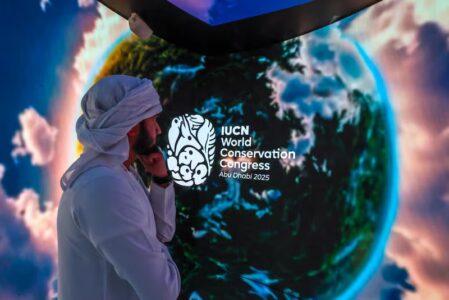
The UAE’s Minister of Climate Change and Environment has hailed the country’s hosting of a major global conservation conference this week as a “significant milestone” in its quest to help safeguard the planet.
Dr Amna Al Dahak said the International Union for Conservation of Nature (IUCN) World Conservation Congress – being held in Abu Dhabi until October 15 – served as an opportunity for the Emirates to demonstrate its rich biodiversity and environmental history and show that environmental strategies and economic development can go hand-in-hand.
The event has brought together about 10,000 delegates from more than 140 countries, including government officials, scientists, campaigners and indigenous leaders to set the global conservation agenda.
The congress was established in 1948 and has been held in all parts of the world, from Barcelona and Buenos Aires to Nairobi and New Delhi.
This year marks the first time it has been hosted in the Gulf. It was staged in the Middle East, in Jordan, in 2000.
Historic moment
For Dr Al Dahak, the event reflects the UAE’s ambition to position itself as a “global convening power” on environmental issues.
“It’s not just about hosting,” she told The National. “It’s about translating collective ambition into action on the ground. The UAE is always about action.”
“From our founding father Sheikh Zayed, we’ve had a philosophy where man and environment are integrated – where prosperity and preservation are inseparable,” said Dr Al Dahak.
The congress, follows a string of high-profile environmental milestones for the UAE, including hosting Cop28 in Dubai in 2023.
The IUCN gathering offers a chance to highlight the country’s natural heritage, often overlooked in global conversations about the Middle East.
Hidden riches in an arid land
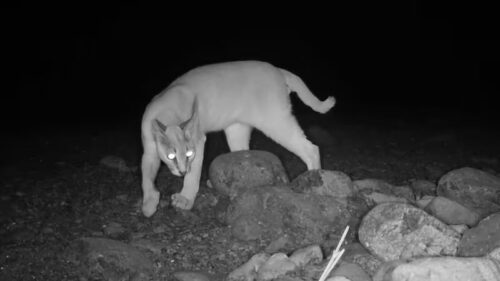
“The international community doesn’t realise how rich the UAE is in biodiversity,” Dr Al Dahak said. “Yes, it’s an arid environment, but within our seas, mountains, and mangroves, there is extraordinary life.”
A recent project, conducted with IUCN support, identified nine Key Biodiversity Areas across the Emirates, from coral reefs and desert ecosystems to mountain habitats. About 98 per cent of those areas are already protected under national legislation.
Among them is the Marawah Marine Biosphere Reserve in Abu Dhabi, home to the world’s largest population of dugongs after Australia. The UAE is home to 80 per cent of Gulf’s seagrass meadows. “That’s what sustains our dugong population,” said Dr Al Dahak.
Such statistics challenge common perceptions of the Emirates as a land of sand dunes and skyscrapers. They also underscore what Dr Al Dahak sees as the UAE’s dual commitment, economic growth that is “pro-climate” rather than extractive.
Growth without sacrifice
The minister rejects the idea that conservation and development are incompatible. “From the beginning, the UAE set the priority that the economy must grow with the environment, not at its expense,” she said. “You don’t have to make a trade-off.”
Policies like the Circular Economy Strategy reflect that approach, aiming to align economic diversification with sustainability.
The country’s renewable energy portfolio, including the vast Mohammed bin Rashid Al Maktoum Solar Park, have become a regional model. “We are blessed with a rapidly growing economy,” Dr Al Dahak said, “but that growth is also creating more opportunities for conservation”.
Restoring and innovating for the future
At the UAE pavilion, the story of the nation’s conservation journey is told through three themes – conservation, restoration, and innovation.
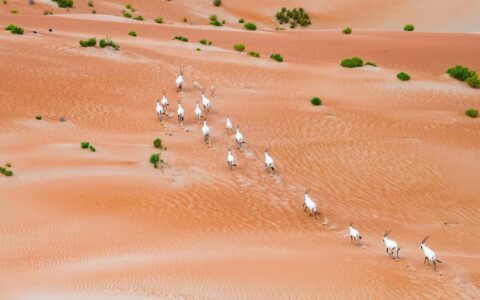
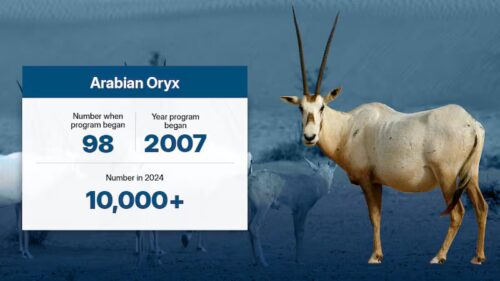
Restoration has long been central to the UAE’s environmental policy. The country leads global efforts to reintroduce endangered species, such as the Arabian oryx, once extinct in the wild, and collaborates with nations as far afield as Chad to restore other at-risk animals.
Meanwhile, the Mohamed bin Zayed Species Conservation Fund has supported projects in more than 170 countries, funding conservationists working to protect threatened flora and fauna.
Innovation, Dr Al Dahak noted, is a necessity in a desert nation. “We’ve faced challenges of heat, salinity, and water scarcity,” she said.
“We couldn’t achieve what we have without innovation.” From satellite monitoring of coral reefs to drone-assisted mangrove planting, the UAE is investing in technologies to accelerate conservation impact.
Educating the next generation
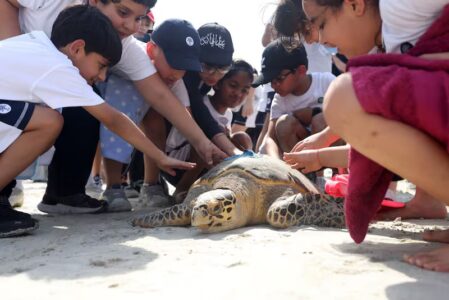
Perhaps Dr Al Dahak’s most passionate focus is education. A former educator herself, she says that every environmentalist must also be an educator. “If we want to sustain the outcomes of IUCN or any international platform, we must equip the next generation to carry that torch,” she said. “Conservation isn’t a one time effort, it’s a continuous learning process.”
Initiatives such as Plant the Emirates, a nationwide campaign combining community action with reforestation and eco-tourism programmes that introduce residents to lesser known natural sites have helped raise public awareness.
A shared responsibility
As the congress continues, Dr Al Dahak hopes delegates leave Abu Dhabi with a deeper understanding of both the UAE’s biodiversity and its belief that environmental stewardship is a shared duty. “It’s not the responsibility of governments alone,” she said. “It’s everyone’s, every individual, every parent. This is how we ensure the planet’s story continues.”