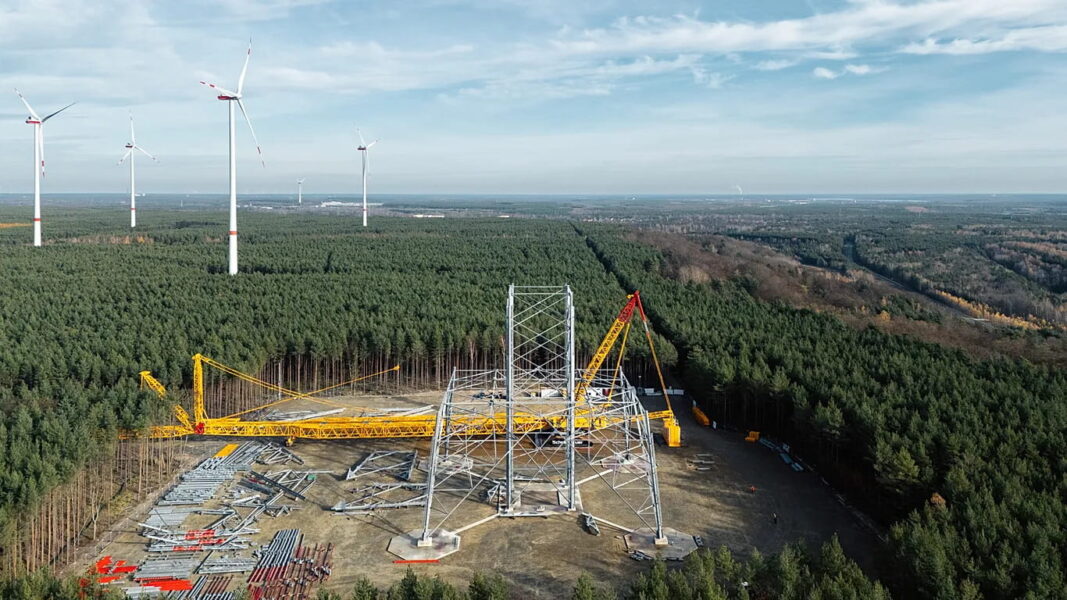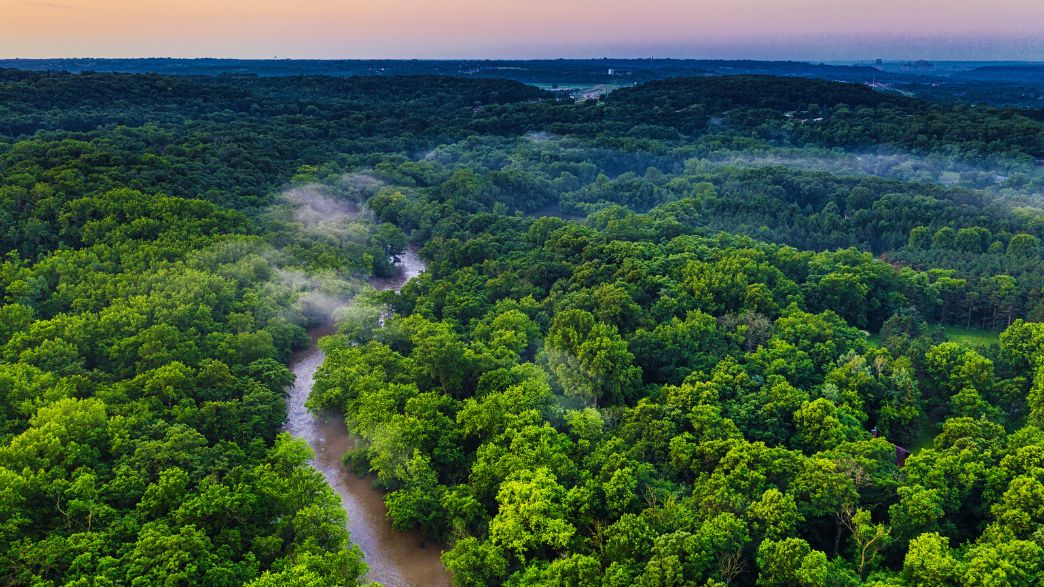


The Rub’ Al Khali, or Empty Quarter, is often thought of as an area of endless sand dunes, a landscape that is striking but, as its name suggests, empty.
But those who have been there many times know that there is much more to the Empty Quarter than the cliché of nothingness, even if visitors may have to look a little harder than in other places to find features of interest.
In an extraordinary three-decade association with Arabia, Dr Gary Brown has made several visits to the sprawling Empty Quarter.
Thanks to his lengthy experience surveying the natural environment of Arabia, few could match Dr Brown’s ability to understand the unforgiving region, which lies in the UAE, Saudi Arabia, Oman and Yemen. The Briton most recently went deep into the area earlier this year.
Being in the Empty Quarter, which, depending on how it is defined, can cover as much as 650,000 square kilometres – an area bigger than France or Ukraine – is, Dr Brown, 66, said, “a very spiritual experience”.
“On the whole it’s a very remote place,” he said. “If you go into the dunes you can more or less guarantee nobody’s been there.
A place of wonder
“It’s still the same as ever, in many places untouched. In some ways you could call many parts of it true wilderness. There is no wilderness left in Europe any more – everything’s been touched by humans in some form or other. Down there you could say it’s true wilderness.
“It’s a huge area. No roads or anything in there, just a few tracks here and there. If you want to get around in there, you have to be self-sufficient. That means taking everything with you.
“You don’t go there by yourself, it’s just not feasible … By yourself it would be far too dangerous because if you do break down, nobody’s going to find you for days.”
It is, he said, “the largest sand sea in the world”, but it is not all sand dunes, as there are also large areas of salt-rich plains.
Nature takes root in the desert
While these plains typically lack plant life, on the sand dunes vegetation may be found even in the depths of the Empty Quarter because sand is “a very good medium for plant growth”.
“In an arid climate, the rain passes through the sand pretty quickly, through the surface layers, but it’s held in the subsurface and plants with deep roots can access this,” Dr Brown said.
“The Bedouins knew this – this is why they always followed the rain for grazing. It’s what they used to do when they were nomads. The camels could smell rain from a long way away – I think from 30 to 40km away and they [the Bedouins] followed the camels and headed to where it rained.
“After a couple of weeks the green starts coming up, grasses come up, sedges come up and in the northern part of the Empty Quarter, the annuals come up, which are very good for grazing.”
While there are no trees in the Empty Quarter – even the hardy ghaf tree found in the UAE cannot cope with the harsh conditions, Dr Brown found about a dozen perennial plant species – species that exist for several years – during his most recent trip. However, there were very few desert annual species.
“I think there are two or three [annual plant] species. If you go to a place like Kuwait you find a couple of hundred [annual plant] species,” he said.
“You can see lots of vegetation in some parts of the Empty Quarter, but it’s salt bush, Zygophyllum. It’s perfectly natural, it’s just that nothing very much eats it, camels don’t like it.”
The wettest parts of the Empty Quarter probably get, Dr Brown said, less than 30mm of rain a year – about a third or less of the amount in most coastal areas of the UAE.
Wildlife thrives at night
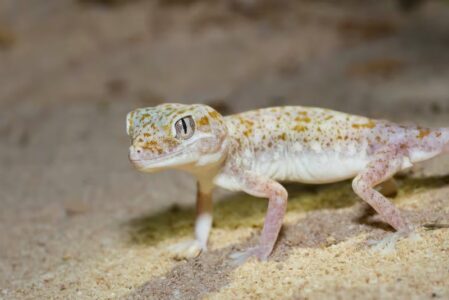
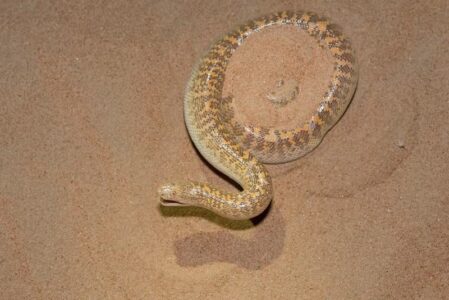
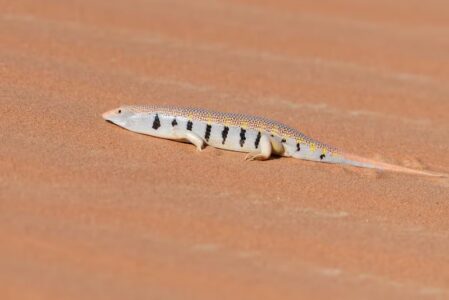
There is, he said, little animal life to see during the day, although creatures such as skinks or sandfish can sometimes be spotted, but Dr Brown said they dive rapidly into the sand when a person comes near.
“All the activity’s at night or a lot of it is,” he said. “We camped down there recently on our trip. If you get up in the morning you see all these footprints – gerbils, jerboas. I think it was Ruppell’s Fox we saw during the day.”
On his latest trip, Dr Brown had an uninvited guest in his sleeping bag – a camel spider. These creatures, which are arachnids but are not actually spiders, can give a nasty bite to people and although not venomous, are capable of killing rodents and small birds, among other creatures.
Dr Brown’s other work on the Arabian Peninsula has been no less interesting than his adventures in and around the Empty Quarter, an area he first visited in 2005.
Originally from Nottingham in central England, as a child Dr Brown moved to Germany, where he completed a PhD before carrying out biodiversity surveys for regional governments.
Then, almost exactly 30 years ago, he moved to the Middle East to teach botany at Kuwait University.
He undertook detailed surveys of the natural environment and, after moving back to Germany, was awarded a higher degree for his work on the vegetation of north-eastern Arabia, particularly Kuwait.
Dr Brown later lived in Abu Dhabi for more than three years, working for the Environmental Research and Wildlife Development Agency, the forerunner of the Environment Agency – Abu Dhabi, a period during which he got to see almost every corner of the Emirates.
Other work included spells helping with desert restoration efforts in Kuwait long after the first Gulf War and, from 2010, a university role teaching botany in Oman, which allowed him to travel widely surveying the country’s natural environment.
Although now living back in Germany, he travels to the region regularly as a consultant to help with land resource management, environmental assessments and conservation.
On September 22, he will give a talk on the Empty Quarter to the Dubai Natural History Group.
Although the Empty Quarter is one of the world’s few remaining wildernesses, it is not devoid of human influence.
Delving into desolate lands
A village in the southern part, Thabhloten, which lies in Saudi Arabia not far from the Omani border, is among the most remote settlements in Arabia and was visited by the British explorer Wilfred Thesiger, who famously travelled through the Empty Quarter.
While covering only a tiny fraction of the land area of the Empty Quarter, there are also oil and gas developments, some of which have provided surprising benefits to birdlife in the area.
“Oil companies have created their own lakes from oil exploration,” he said. “There are one or two lakes down there, artificial lakes, which depending on the time of year are wet or dry.
“[There is] lots of birdlife. You’d be surprised what turns up in these artificial wetlands but also natural ones … there are springs.”
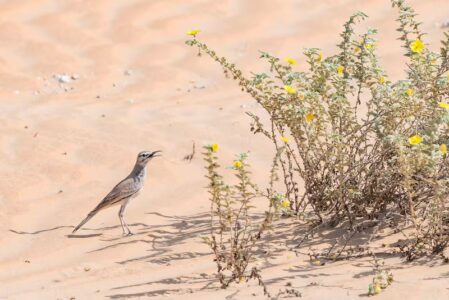
Among the birds Dr Brown has seen in the Empty Quarter is the hoopoe-lark, one of the few resident avians. A migratory species that passes through is the bluethroat, an attractive insectivorous wetland bird of countries including the United Kingdom. Dr Brown has spotted ducks, waders and harriers.
“[Migratory birds] tend to avoid the Empty Quarter if they can, but it’s not always possible. I suppose they might learn that there are wetlands there,” he said.
“The water’s brackish in some places, so it’s probably not too good to drink, but there are reed beds there for them to hide in.”
So, despite its reputation as a vast emptiness, for experts such as Gary Brown, Rub’ Al Khali offers plenty to see.